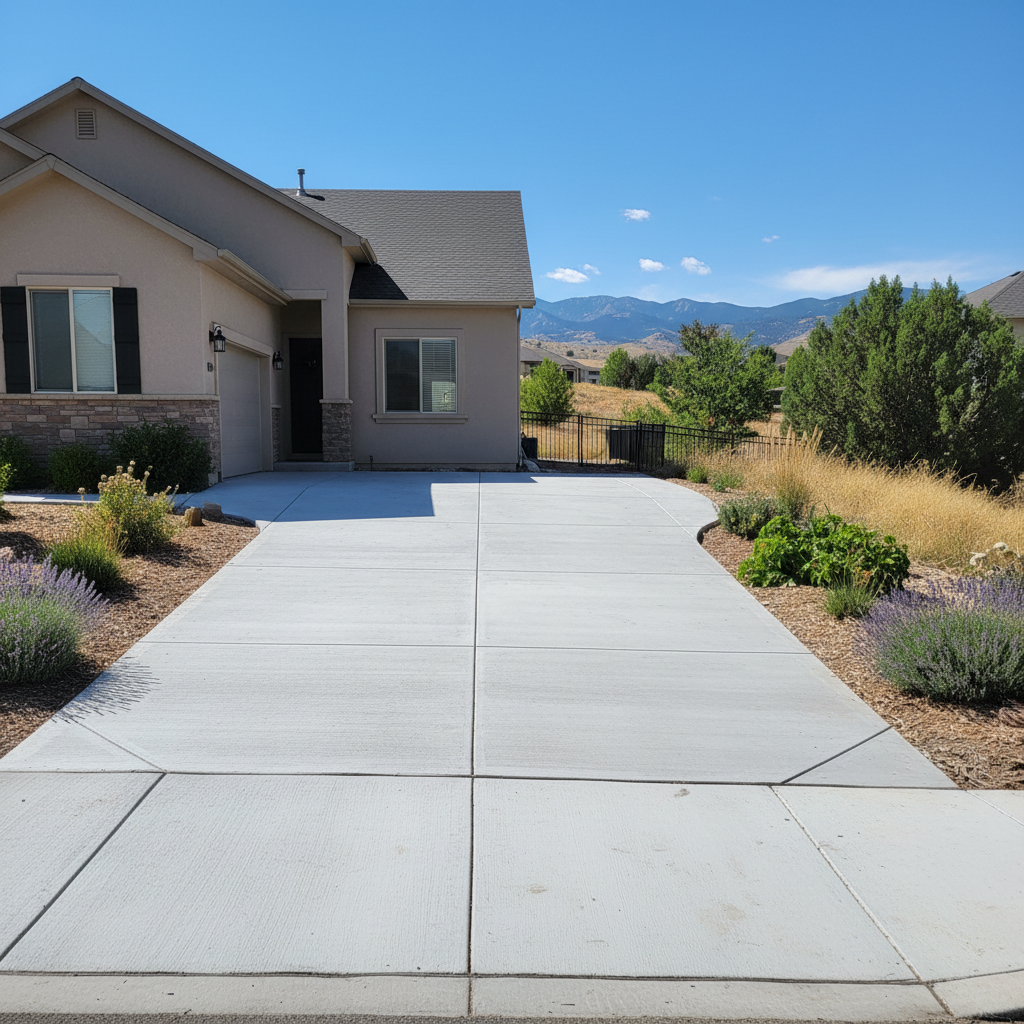
Thinking All Concrete is the Same
This is probably the biggest misconception I run into. People just figure concrete is concrete, right? You pour it, smooth it out, and you're done. But that's not really how it works, especially here in Draper. We get some wild temperature swings – scorching summers, then freezing winters. That constant expansion and contraction absolutely brutalizes concrete if it's not mixed and installed correctly. You simply can't use a generic mix for a driveway that's going to handle heavy vehicles and winter salt, then expect it to last as long as a patio that only sees foot traffic. It just won't happen.
A good contractor, like us at All Star Concrete Solutions, knows exactly the right PSI (pounds per square inch) strength you need, the correct air entrainment for those freeze-thaw cycles, and the right slump for your specific job. If a bid doesn't even mention these details, or if the contractor just shrugs and says, "Oh, we use standard concrete," that's a huge red flag. You're basically setting yourself up for cracks and spalling down the road, and trust me, nobody wants to redo concrete a few years later. What a pain.
Ignoring Site Prep and Drainage
You wouldn't build a house on a shaky foundation, would you? The same idea applies to concrete flatwork. The ground underneath is just as crucial as the concrete itself. I've seen way too many projects where homeowners or inexperienced contractors cut corners on the site preparation. They don't properly compact the subgrade, or they skip putting down a good gravel base. What happens then? The ground settles unevenly, and your beautiful new concrete cracks or sinks. It's not a question of *if* it will happen, but *when*.
And then there's drainage. Draper has some hilly spots, like up by Suncrest, and water runoff is a very real concern. If your new patio or driveway doesn't slope correctly away from your house, you'll end up with water pooling against your foundation. That can lead to much bigger, more expensive problems than just a cracked slab. Always ask your contractor about their plan for grading and drainage. They should be able to explain it clearly, in plain English.
Going for the Cheapest Bid
Look, I totally get it. Everyone wants to save some cash. But when it comes to concrete, the cheapest bid is almost never the best one. It usually means they're cutting corners somewhere – maybe on the quality of materials, the experience of their crew, or that absolutely critical site prep we just talked about. I've had to fix plenty of jobs where someone went with the lowest price, and it ended up costing them double in the long run. What a headache.
Think about it: a reputable contractor carries insurance, pays their crew a fair wage, uses quality materials, and stands behind their work. All of that costs money. If a bid seems too good to be true, it probably is. Definitely get multiple bids, but make sure you're comparing apples to apples. Ask what's included, what kind of concrete they're using, and what their warranty covers. Don't be shy about asking for references or to see examples of their past work.
Not Getting Everything in Writing
This one seems simple, but people still mess it up. You have a great chat with a contractor, shake hands, and think you're all set. Then, halfway through the job, there's a misunderstanding about the scope of work, the timeline, or the final cost. It just creates a huge headache for everyone involved.
Every single detail should be in a written contract. I'm talking about the exact dimensions, the type of concrete, the thickness, the finish, the start and end dates, the payment schedule, and what happens if unexpected issues pop up. If a contractor hesitates to put everything in writing, or if their contract is vague, just walk away. A professional company will have a clear, comprehensive contract that protects both you and them.
Not Understanding Expansion Joints and Control Joints
This is a bit technical, but it's super important for how long your concrete will last. Concrete expands and contracts as temperatures change. If you don't give it places to do that, it's going to crack wherever it wants – usually in ugly, unpredictable ways. That's where expansion joints and control joints come in. Expansion joints go all the way through the slab and let it move a lot, often where new concrete meets an existing structure like your house foundation.
Control joints, also called saw cuts, are grooves cut into the concrete's surface. They're designed to create weakened planes so that if the concrete does crack (and it will, eventually, that's just how concrete behaves), it cracks neatly along those lines. If your contractor isn't planning for these, or if they're spacing them too far apart, you'll end up with random, unsightly cracks. Ask them about their jointing plan. It shows they know what they're doing, you know?
Forgetting About Curing
After your concrete gets poured, it needs to cure properly. This isn't just about letting it dry; it's a chemical process where the concrete actually gains strength. If it dries too quickly, especially during our hot, dry Draper summers, it can weaken the concrete and cause surface cracking. A good contractor will have a plan for curing, whether that's keeping it wet, applying a curing compound, or covering it. Don't let them just pour it and walk away without talking about how they'll manage the curing process. It's absolutely critical for the strength and durability of your new concrete.
Not Checking References or Insurance
Before you hire anyone, always, always check their references. Talk to past clients. Ask if the contractor showed up on time, stayed on budget, and if they were happy with the final product. And for goodness sake, make sure they're licensed and insured. If a worker gets hurt on your property and the contractor isn't insured, you could be held liable. It's a simple phone call to verify, and it protects you from a huge potential headache. Seriously, don't skip this step.
Ready to Get Started?
Doing your homework upfront can save you a ton of grief and money down the line. Don't rush into a concrete project without understanding these common pitfalls. If you're ready to talk about your next concrete project in Draper, give us a call at All Star Concrete Solutions. We're here to help you get it right the first time.