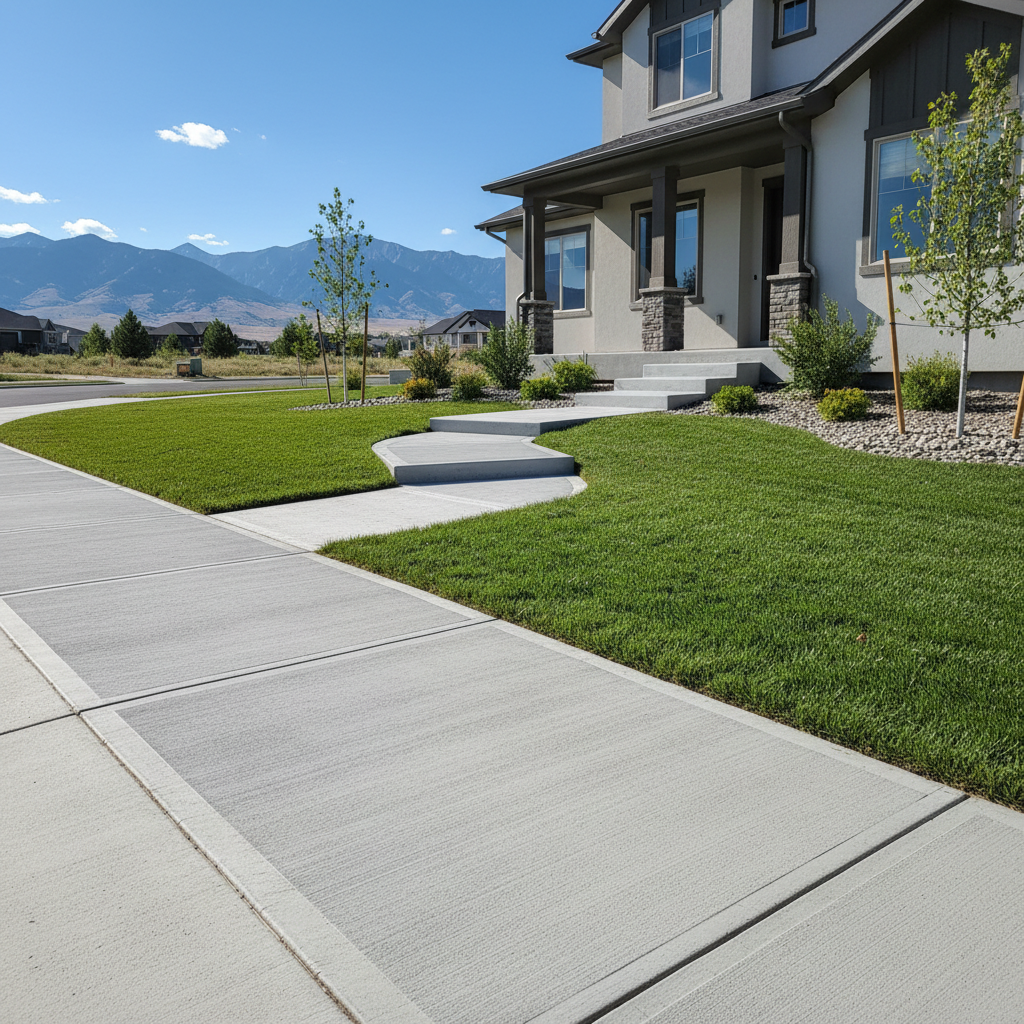
Thinking about putting in a new concrete sidewalk? Maybe you want to replace an old, cracked one, or just add a path to your backyard. Smart move! A good sidewalk really boosts your home's curb appeal and makes things safer for everyone. But let me tell you, over the years, I've seen plenty of folks right here in Draper stumble into some pretty common mistakes when they're planning these projects or picking someone to do the work. So, let's chat about what to look out for, okay? That way, you won't end up kicking yourself later.
Mistake #1: Not Getting Enough Bids (Or Getting the Wrong Kind)
Look, I totally get it – you want to save some cash. Who doesn't? But just jumping on the first quote you get, or worse, just picking the cheapest one, that's a recipe for trouble. You really need to get at least three bids, and here's the kicker: they have to be "apples-to-apples" comparisons. Don't just say, "I need a new sidewalk." Be super specific. How thick will it be? What PSI concrete are they using? Are they going to prep the subgrade properly? Will they include rebar or mesh? And what about expansion joints?
If one bid comes in way, way lower than the others, that's a huge red flag, believe me. It usually means they're cutting corners somewhere – maybe thinner concrete, no rebar, or a shoddy base prep. That sidewalk might look okay for a year, maybe two, but then you'll start seeing cracks, heaving, and all sorts of problems. Especially with our Draper freeze-thaw cycles, you know? You'll just end up paying twice.
Mistake #2: Ignoring the Subgrade
This one's a big deal. The dirt under your concrete? It's just as important, maybe even more so, than the concrete itself. We've got all sorts of soil conditions around here, from the sandy stuff closer to the mountains to some areas with more clay. If that ground isn't properly compacted and prepared, your sidewalk will settle unevenly. You'll get cracks, trip hazards, and it just won't last. A good contractor will always talk about base preparation. They'll dig it out, bring in granular fill if needed, and compact it thoroughly. If they don't bring it up, ask. And if they brush you off? Walk away.
Mistake #3: Forgetting About Drainage
Water and concrete? Not exactly best friends. If water just sits on your sidewalk, or even worse, gets underneath it and can't drain away, you're going to have problems. Think about where the water will go when it rains, or when the snow melts. Does your sidewalk slope away from your house? Does it send water to a garden bed or a storm drain, instead of right towards your foundation or your neighbor's property? A skilled contractor, like the folks at All Star Concrete Solutions, will always consider the grade. They'll make sure proper drainage is part of the design. It's not just about pouring a flat surface; it's about building a pathway that really lasts and works.
Mistake #4: Skipping on Reinforcement
Some people think concrete is strong enough on its own. And it is, when you push on it. But it's not so great when it's pulled apart, which happens when the ground shifts or expands and contracts. That's where reinforcement comes in. We're talking rebar or wire mesh. For a typical sidewalk, mesh is usually fine, but for heavier traffic or if you're worried about ground movement, rebar is a smart choice. It holds the concrete together, stopping those small cracks from turning into big, ugly ones. If a contractor tells you they don't need to reinforce it, that's another red flag. They're trying to save a buck, but it'll cost you later.
Mistake #5: Not Checking References or Insurance
This might seem obvious, but you'd be surprised how many homeowners skip this step. Anyone can claim they're a concrete guy. But are they licensed? Do they have insurance? What happens if someone gets hurt on your property? What if they accidentally damage your sprinkler system or your neighbor's fence? If they're not insured, that liability falls squarely on you. Always ask for proof of insurance and check their license. And don't just take their word for it – call a couple of their past clients. Ask about their communication, how timely they were, and if the finished product met expectations. A reputable contractor will be happy to provide these, trust me.
Doing your homework upfront might take a little extra time, but it will save you a ton of headaches and money down the road. A well-done concrete sidewalk should last for decades, not just a few years. Don't settle for less.