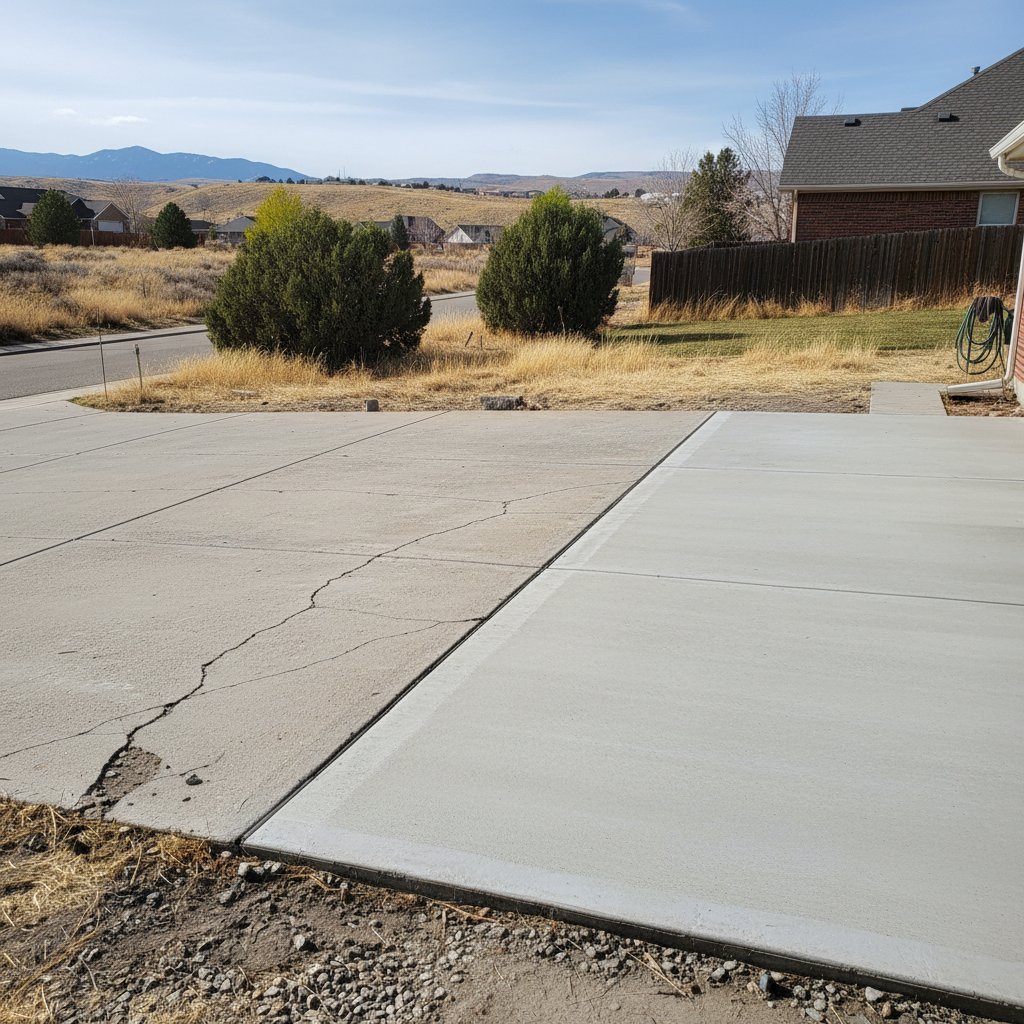
Your driveway or patio is looking pretty rough, huh? Maybe it's got a big crack running through it, or a section has sunk lower than the rest. I see it all the time here in Draper, especially with how our soil can shift and those harsh winters we get.
When you're staring at that eyesore, your first thought might be, "Ugh, I need a whole new driveway." And sometimes, you do. But often, there's a more cost-effective and surprisingly durable option: concrete repair. Let's talk about when to rip it out and when to fix it up.
The Full Monty: New Concrete Installation
This is pretty straightforward. We come in, break up the old stuff, haul it away, prep the base, and pour fresh concrete. It's a big job, but when it's done right, you get a brand-new surface that looks fantastic and should last for decades.
When New Concrete is Your Best Bet:
- Extensive Damage: If your concrete looks like a spiderweb of cracks, or if large sections are crumbling and spalling (that's when the surface flakes off), a repair might just be a band-aid. We're talking about structural failure, not just cosmetic issues.
- Poor Base Prep: Sometimes, the original concrete was poured on a poorly compacted base. You see this a lot in older homes, or places where builders cut corners. If the ground underneath isn't stable, any repair will likely fail eventually. We need to get down to the dirt and do it right.
- Major Drainage Issues: If your concrete is consistently pooling water right next to your house, or if the slope is completely wrong, a full replacement allows us to re-grade properly and fix those drainage problems for good. You don't want water getting into your foundation, especially with our heavy spring snowmelt in areas like SunCrest.
- Complete Aesthetic Overhaul: You want a totally different look – maybe a new color, stamped pattern, or a different layout. A full pour gives you a blank slate to work with.
Cost and Durability of New Concrete:
It's the most expensive option, no two ways about it. You're paying for demolition, disposal, materials, and labor for a whole new installation. But the durability is top-notch, assuming it's installed correctly by a reputable company like All Star Concrete Solutions. You're looking at 20-30 years, easy, with proper care.
The Smart Fix: Concrete Repair & Resurfacing
This is where things get interesting and can save you a lot of money. Concrete repair isn't just patching a crack with some caulk. We're talking about things like concrete lifting (also called mudjacking or polyjacking) for sunken slabs, crack repair with specialized epoxies, and resurfacing with durable overlays.
When Repair is a Smart Choice:
- Localized Sinking: If just one section of your driveway or patio has sunk, but the rest is generally in good shape, concrete lifting is a fantastic option. We drill small holes, pump material (either a cementitious slurry or polyurethane foam) underneath, and gently raise the slab back to level. It's often done in a few hours, and you can usually use the surface the same day.
- Minor to Moderate Cracks: If you have a few significant cracks, but the concrete isn't completely fractured, we can often repair them. We clean out the crack, sometimes widen it slightly, and fill it with a flexible, strong material that bonds to the existing concrete. This stops water intrusion and prevents further deterioration.
- Surface Spalling/Discoloration: If the concrete is structurally sound but the surface is flaking, pitted, or just looks bad, a concrete overlay can be applied. This is a thin layer of specialized concrete mix that goes right over the existing slab, giving it a fresh, new look without the demolition. It can even be colored or textured.
- Budget Constraints: Let's be real, a full replacement is a big investment. Repairs are almost always significantly less expensive.
Cost and Durability of Concrete Repair:
Costs vary wildly depending on the type and extent of the repair. Lifting a slab is usually a fraction of the cost of replacing it. Crack repairs are even less. Overlays are more involved but still typically cheaper than a full tear-out. The durability of a repair depends on the type of repair and the underlying issue. A well-executed lift can last for many years, as can a good crack repair. Overlays, if applied correctly, can add another 10-15 years of life to a structurally sound slab.
So, What's My Recommendation for Draper Homeowners?
Given our climate – the freeze-thaw cycles, the expansive soils in some areas, and the general wear and tear – I lean towards repair whenever possible, especially for localized issues. Why? Because it's often more economical, less disruptive, and surprisingly effective.
If you've got a single sunken slab, don't jump straight to replacement. Get a quote for concrete lifting. If you've got a few prominent cracks but the rest of the concrete is solid, repair them before they get worse. You'll save money, and you'll extend the life of your existing concrete significantly.
However, if your concrete is truly falling apart, like it's been through a war zone, or if the drainage is a nightmare, then a full replacement is the right call. You don't want to throw good money after bad on endless repairs. The key is knowing the difference.
The best thing you can do is have someone who knows concrete take a look. We'll give you an honest assessment of whether a repair will hold up or if it's time to bite the bullet and go for a new pour. We've been doing this for years at All Star Concrete Solutions, and we're happy to come out and give you our professional opinion.