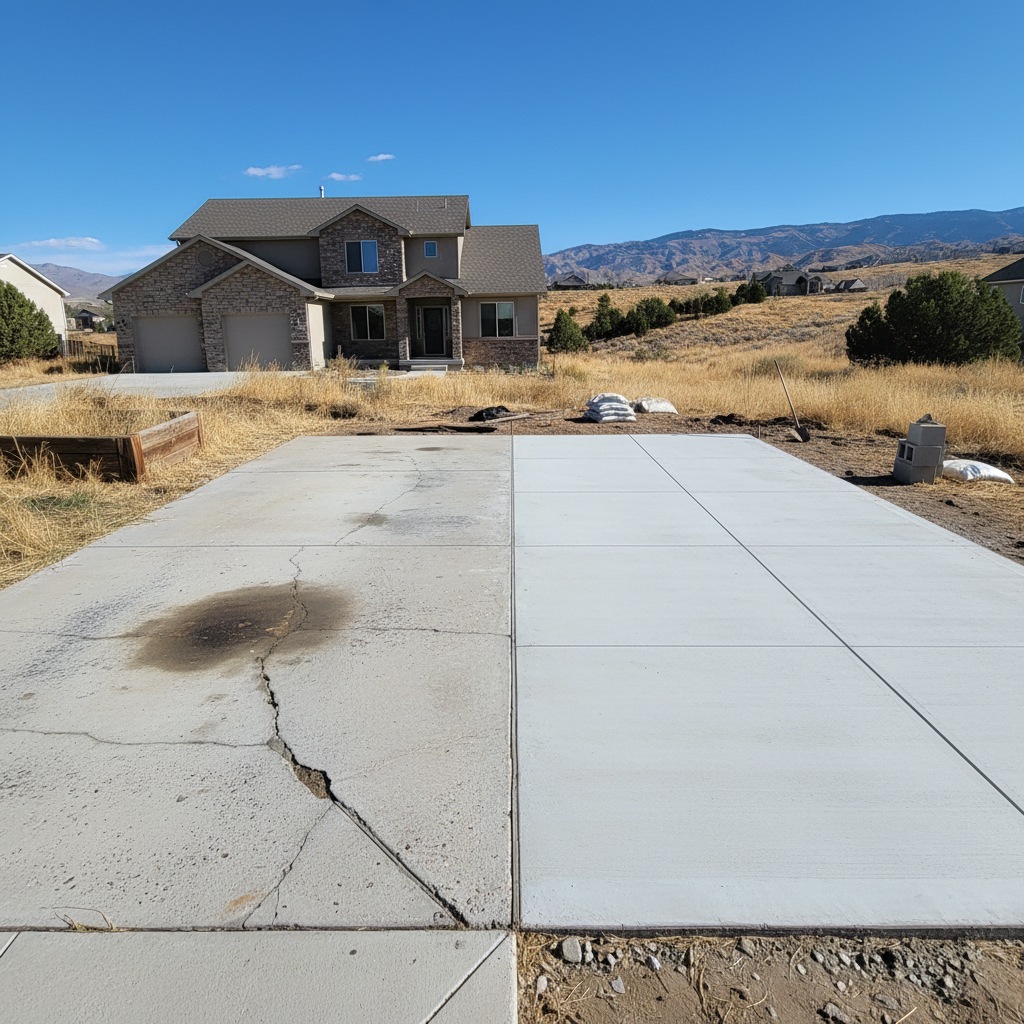
Alright, so you're thinking about building a new home or maybe an addition right here in Draper. And you're staring down one of the biggest decisions, aren't you? What kind of foundation are we putting this thing on? It’s not just about what goes on top; what's underneath really counts. Around here, when it comes to concrete foundations, you've got two main players: the good old slab-on-grade and the full basement. Let's dig into what each one offers, because honestly, it's not a one-size-fits-all kind of deal.
Slab-on-Grade Foundation: The Straightforward Approach
A slab-on-grade foundation is pretty much exactly what it sounds like. We pour a concrete slab directly onto the ground, usually with a thicker edge that acts as the footing. Then your house gets built right on top of it. It's a popular choice for a bunch of reasons, especially if you're looking to keep things simple and save some money.
Cost
This is where the slab really shines, no doubt about it. Generally speaking, a slab-on-grade foundation will be your cheapest option upfront. You're talking less digging, less material (no walls going eight feet down, for example), and usually a quicker pour. If you're on a tighter budget or just want to put more of your cash into the fancy finishes upstairs, a slab makes a lot of sense.
Durability
Slabs are tough. They're solid concrete, and when we reinforce and pour them correctly, they can easily last a lifetime. The biggest concern we see around Draper, especially in areas with expansive clay soils — like some of the older parts of SunCrest or down by the river — is ground movement. If the soil underneath shifts because of moisture changes, a slab can crack. So, proper site prep and good drainage are absolutely critical here to prevent problems later on. You never want water pooling near your foundation, ever.
Maintenance
Maintenance on a slab is pretty minimal. Mostly, you're just keeping an eye on your exterior drainage. Now, if you've got plumbing lines embedded in the slab and they leak, that can be a real headache to fix. You'd have to break up concrete to get to them. But generally, there's no basement to worry about flooding, no sump pump to maintain, and no foundation walls to inspect for cracks below ground. That's a plus!
Appearance
Well, you don't really 'see' the foundation once the house is built, beyond the exposed perimeter. But what a slab means for your home's appearance is that everything's on one level. No stairs down to a basement, which can be great for accessibility or if you just prefer single-story living. It keeps the house's profile lower to the ground, too.
Full Basement Foundation: The Underground Advantage
Now, a full basement foundation is a whole different ballgame. We dig down deep, pour footings, build concrete or block walls, and then pour a concrete slab for the basement floor. This gives you an entire extra level right underneath your main living space.
Cost
Expect to pay more for a basement. There's a lot more digging involved, more concrete for those walls, more rebar, more labor, and usually more time. You'll also need to factor in things like waterproofing the exterior walls, installing a drain tile system, and possibly a sump pump. It's a pretty significant jump in upfront cost compared to a slab.
Durability
Basements are incredibly durable. Those concrete walls are built to withstand the pressure of the earth around them. They're designed to support the entire house above. Just like with slabs, proper drainage and waterproofing are key. Water is the enemy of any foundation, and with a basement, you've got a lot more underground surface area that needs protection. But when we do it right, a basement foundation is rock solid.
Maintenance
Maintenance can be a bit more involved with a basement. You've got to keep an eye on those walls for any signs of water getting in or cracking. Sump pumps need checking periodically to make sure they're working, especially before spring runoff or heavy rainstorms. If you finish the basement, you're also maintaining another living space. But the big upside is that if you have a plumbing issue, it's usually much easier to get to and repair lines in a basement ceiling or wall than it is to jackhammer a slab. That's a huge relief, believe me.
Appearance & Utility
This is where basements really win for a lot of folks. You're essentially getting double the square footage for a fraction of what it would cost to add that space above ground. That extra space can be finished for bedrooms, a family room, a home office, a gym, or just plain storage. It adds a ton of utility and flexibility to your home, doesn't it? Plus, in the summer, a basement stays naturally cooler, which can be a nice break from those hot Utah afternoons. It also gives you a safe, interior space during a big windstorm or other crazy weather.
My Takeaway for Draper Homeowners
Look, both options are solid when they're done right. Here at All Star Concrete Solutions, we pour both kinds of foundations all the time, and we know exactly what it takes to make them last.
If you're on a tight budget, want a simpler build, and don't need the extra square footage, a slab-on-grade is a perfectly good choice. Just make absolutely sure your contractor is doing top-notch site prep and drainage. That's non-negotiable, especially with our local soils.
However, for most homeowners here in Draper, I'm going to lean towards a full basement. Yes, it costs more upfront. But that extra space is invaluable. You're getting a huge return on investment in terms of usable square footage, storage, and flexibility. It's a much more versatile home that can adapt as your family grows or your needs change. The resale value often reflects that too. Plus, having that cool, quiet refuge in the summer or a safe spot during a storm is something you can't really put a price on.
Ultimately, the best foundation for you depends on your budget, your needs, and your long-term plans for the home. Talk to your builder, consider your lifestyle, and don't skimp on the foundation — it's literally the groundwork for everything else.