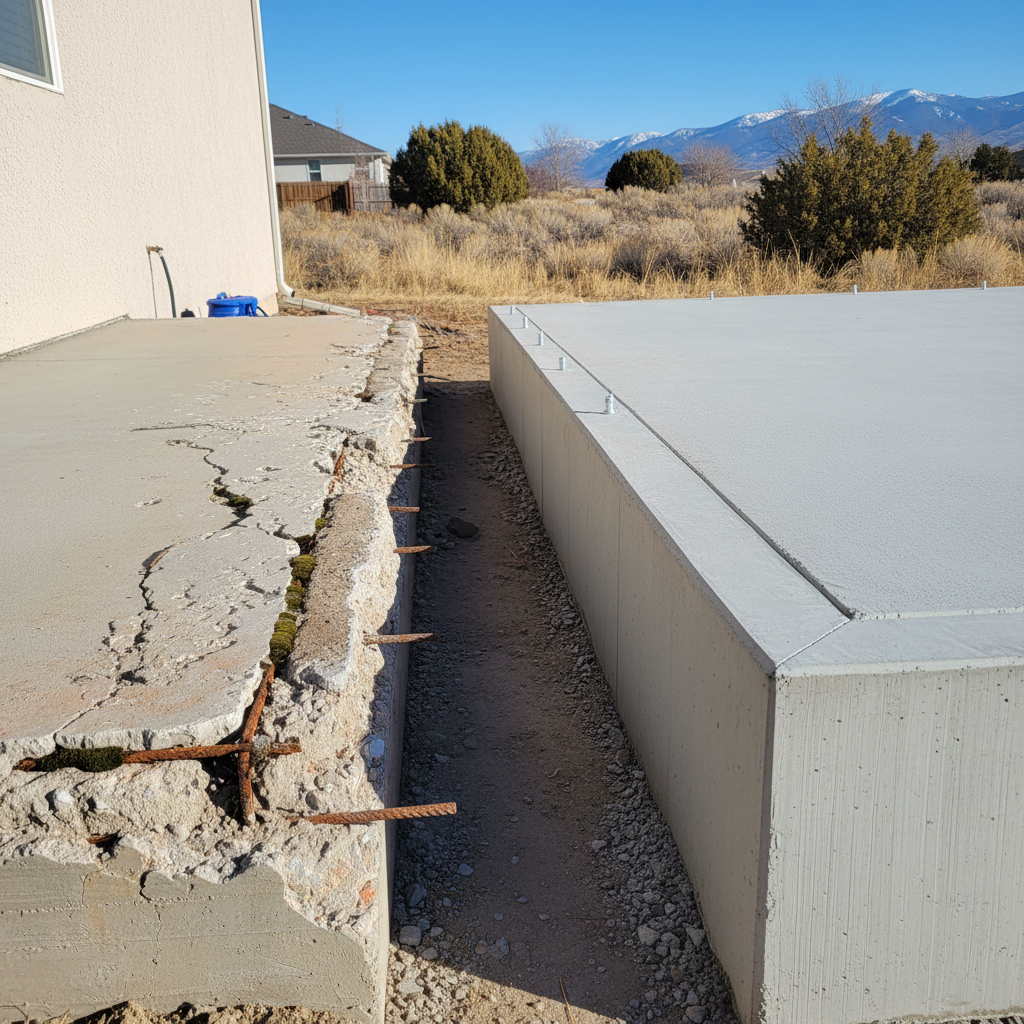
Alright, let's talk about foundations. When you're building a new home or adding an extension here in Draper, one of the first big choices you'll make is what kind of foundation goes underneath it. Most folks end up looking at either a slab-on-grade or a crawl space. Both have their uses, but they're definitely not equal, especially when you think about the specific conditions we deal with here in the Salt Lake Valley.
Slab-on-Grade Foundations: The Basics
A slab-on-grade foundation is pretty much what it sounds like: a big, thick concrete slab poured right onto the ground. Usually, we reinforce it with rebar or wire mesh, and the edges are often made thicker to form a solid footing. Before we pour, we'll put down a vapor barrier and typically some insulation, which is a smart move here in Utah where the ground can get quite cold.
Pros of Slab-on-Grade:
- Cost: Generally, slabs are cheaper to build upfront. There's less digging, no need for stem walls or a separate floor system, and you use less concrete overall compared to a full basement or even a deep crawl space. That's a big plus for many homeowners, isn't it?
- Speed: They're quicker to put in. Once the ground is prepped and the forms are set, it's a one-shot deal with the concrete pour.
- Durability & Stability: A properly poured slab is incredibly strong and stable. You won't have to worry about wood rot or pests, which can be an issue with a crawl space. Plus, it's less prone to moisture problems if it's installed right with a good vapor barrier.
- Energy Efficiency: If you put radiant heating in your slab, it's super efficient. Even without that, the concrete's thermal mass can really help keep indoor temperatures steady.
Cons of Slab-on-Grade:
- Access to Utilities: This is a major drawback. If you have plumbing or electrical lines running through or under the slab and something goes wrong, you're looking at jackhammering concrete. It's messy, expensive, and a real headache.
- Moisture: While a good vapor barrier helps, if you get serious hydrostatic pressure or a leak, that moisture can wick right up through the concrete. You'll see it in your flooring, and it can lead to mold or mildew issues — definitely not ideal.
- Repairs: As I mentioned, repairs are tough. If the slab settles unevenly because of poor soil compaction or expansive clay soils (which we absolutely have around here, especially in places like the SunCrest development), leveling it can be a complicated and costly process.
- No Storage/Space: You don't get any extra room for storage or future expansion.
Crawl Space Foundations: What You Need to Know
A crawl space foundation means building short foundation walls (we call them stem walls) on footings, which creates a shallow area between the ground and your home's first floor. This space is usually about 3-5 feet high, just enough for someone to